
Merchants and Mercenaries of Visby
4.9
( 28 reviews )
$8.99


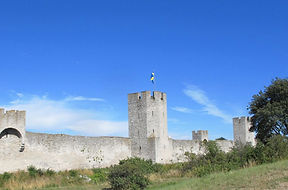
Step into Visby on a short self-guided walk through medieval walls, cobbled lanes, and a Baltic island town rich in Hanseatic history and storybook charm.
Highlights
Discover why Visby's three kilometre medieval wall was built against fellow Gotlanders, not foreign invaders
Hear about a Lübeck friar who bought two waterfront brothels just to expand his church choir
Spot a Khazar silver coin reading 'Moses is the messenger of God' that reached Gotland by the Volga trade route
Stand on the burial field where the city gates stayed bolted while their countrymen were cut down outside
Find the craft brewery that copied a medieval ruin's arches onto its bottles and helped launch Sweden's modern beer scene
Preview Stop
About this activity
Free Cancellation
Cancel up to 2 hours in advance for a full refund
Valid 365 days
Tour is valid for 1 year and can be used multiple times
Language Options
English | French | German | Spanish | Italian | Dutch | Polish | Russian | Portuguese
Duration
1 hour and 30 minutes
Itinerary
Norderport (Northern Gate)
Spot the iron rings still set into the limestone arch where defenders once chained the road shut.
Visby Town Wall
Trace three kilometres of wall built not against foreigners but against the city's own countrymen.
East Graves
Stand at the burial field where the city gates stayed bolted while their countrymen were cut down outside.
St. Nicolai Ruin
Step into a roofless brick shell where Sweden's first Dominican friars filled the vaults for nearly three centuries.
Visby Cathedral
Walk through the only Visby church still in use, funded by a tax on every German merchant ship.
S:t Lars gränd & S:t Drottensgatan
Pause between two ruined churches whose floor plans reveal Visby once had a Russian merchant quarter.
Gotlands Bryggeri
Find the craft brewery that copied a medieval ruin's arches onto its bottle labels.
Christopher Polhems Staty
Meet the Gotlander whose career began by fixing a cathedral clock that had been silent for a hundred years.
DBW's Botanical Garden
Wander through a garden funded by fines that twelve young swimmers once paid each other for bathing too long.
Fiskargrand
Follow Visby's most photographed alley and learn why its famous climbing roses are not as medieval as you think.
Great Square
Search the great square for traces of a friary built where two harbour brothels once stood.
Wisby Ost AB
Climb the only spot inside the wall connecting upper and lower Visby without ever leaving the city.
Adelsgatan
Walk the street whose name has been misread as 'noble' for centuries when it really means the way of common folk.
Sankt Hans kyrkoruin
Notice the joint where two ruined churches share one piece of stonework, one Gotlandic, one German.
Burmeister
Enter the seventeenth century home of the Lübeck outsider who became one of Visby's most powerful men.
Gotlands Museum
Hunt for the silver coin reading 'Moses is the messenger of God' that reached Gotland by the Volga trade route.
Strandgatan
Pass beneath stepped gables of seven storey limestone warehouses where dried fish and Russian fur once filled the rooms.
Almedalen Park
Finish in the harbour park where the sea retreated and a young Olof Palme launched Sweden's biggest political festival.
OR
Download app for instant tour access


Top Reviews
Ren
Visby
19 July 2026
Full Description
Important Information
Instructions with link to app and how to access the tour will be sent to your email post checkout
You can gain instant access to the tour by downloading the app and buying the tour on the app