top of page

Stories and Saints Self Guided Walk in Budva Old Town

4.9

( 28 reviews )

$6.99

WhatsApp Image 2025-02-18 at 10.33.58.jpeg
WhatsApp Image 2025-02-18 at 10.39.09.jpeg
building-6145831_1280.jpg
WhatsApp Image 2025-02-18 at 14.17.16.jpeg

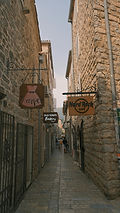
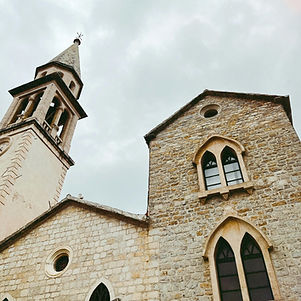
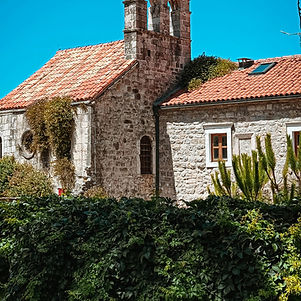
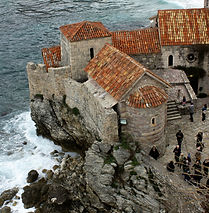
Discover Budva on a short self-guided walk through stone-walled old town streets, Adriatic sea views, and a coastal city steeped in centuries of Mediterranean history.

Highlights


- Uncover how a single earthquake revealed Roman bathhouses, ancient graves, and a 12th-century plaque hiding in plain sight

- Decode the Venetian lion above the Land Gate and the story behind its Latin inscription

- Step inside the only church where Catholic and Orthodox altars stood side by side for nearly two centuries

- Trace the founding myth of Budva involving a Phoenician prince, a cursed necklace, and a community named after eels

-Discover the Hollywood connection that left a giant prop bell in the square and gave Brad Pitt his lost first lead role

Preview Stop

Vinicia Pavlina's Altar
00:00 / 01:04
This small square stone, set apart in this little corner of the Old Town, is a Roman sacrificial altar. It is from the first or second century after Christ, and it has a short inscription on its face. It contains a name: Vinicia Pavlina. We do not know exactly who Vinicia Pavlina was. We can guess from the name. Vinicia is a Roman family name, and Pavlina is the feminine form of Paulinus. So she was a woman, almost certainly from a respectable Roman household, possibly the wife or daughter of a local Roman administrator. The carving is careful, and the letters are neat, which suggests the family could afford a competent stonemason. The altar appears to have been used for wine sacrifices. This was a daily Roman religious practice. The Romans regularly used wine in their rituals through a practice called a libation. This involved pouring a small amount of wine onto an altar or onto the ground as an offering. It was usually done at the beginning of a ceremony, whether in a public temple or in a private home. Now, you might wonder, why use wine? That’s because it was important to the Romans, as they saw it as a pure and valuable substance. Hence, offering wine was a way to show respect to the gods and ask for their protection or blessing. Sometimes the wine was mixed with water or incense, and when poured onto a heated altar, the rising aroma was believed to carry the prayer to the gods. So somewhere in this town, in the first or second century, Vinicia Pavlina poured wine on this stone, probably regularly, possibly daily, asking the gods for protection of her family. It was a private gesture in a private home. I find this stop quietly moving. The town is full of grand monuments and famous saints and political martyrs, and rightly so. But this is just one woman, by name, who lived here long ago, whose family is forgotten, but her name is still here. Of all the millions of Romans who must have walked through this town, Vinicia Pavlina is the one we can still say hello to. And once again, this is here because of the earthquake. The altar was discovered when the surrounding buildings came down. It had been hiding in plain sight, possibly used as a doorstep or a cornerstone, for hundreds of years before that. Follow the map to a stone building with a small museum sign by the door. That is our next stop.
About this activity 


Free Cancellation 

  • Cancel up to 2 hours in advance for a full refund 

Valid 365 days 

  • Tour is valid for 1 year and can be used multiple times 

Language Options  

  • English | French | German | Spanish | Italian | Dutch | Polish | Russian | Portuguese

Duration  

  • 1 hour and 30 minutes

Starting point


The Land Gate -   Google Maps

Itinerary
Main Gate
Look up at the winged lion above the arch, the explanation involves a stolen body and barrels of pork.
Bell (The Long Ships)
Weigh up an enormous bronze bell that has never rung.
Iron Gate
Pass beneath the only iron gate in town and learn which gate locals once used to throw their garbage out.
Square of Palms
Notice why the palm trees here outlived the empire that planted them and meet a forgotten Budvan opera historian.
City Museum of Budva
Hear about the bronze helmets, glass urns and Hellenistic gold that workmen pulled from the ground.
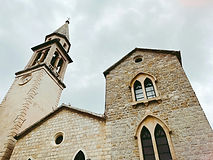
Santa Maria in Punta Church
Spot the bell tower locals nicknamed the tower on a horse's tail and ask why it sits so awkwardly.
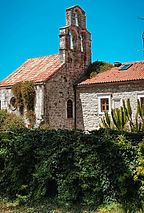
Church of St. Sabba the Sanctified
Decode how Catholic and Orthodox altars once stood in the same small room with only a wall between them.
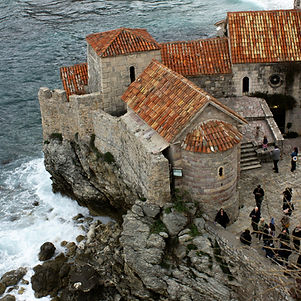
The Library In The Citadel
View an ancient acropolis and spot the island where a saint allegedly tossed stones into the sea by hand.

OR

Download app for instant tour access

Screenshot 2025-02-24 at 5.10.26 PM.png
Screenshot 2025-02-24 at 5.10.32 PM.png

Top Reviews

Full Description
Walk through one of the oldest towns on the Adriatic where a 1979 earthquake uncovered Roman baths, Hellenistic graves, and forgotten altars hidden beneath the streets for centuries. From a Phoenician founding myth to a Hollywood prop, this self-guided audio tour traces 2,500 years of history across 15 stops.
Important Information 


  • Instructions with link to app and how to access the tour will be sent to your email post checkout  

  • You can gain instant access to the tour by downloading the app and buying the tour on the app
Frequently asked questions

bottom of page