Risen from Ruins Tour of Rotterdam
Explore Rotterdam on a short self-guided walk through bold modern architecture, vibrant waterfronts, and a city defined by innovation and reinvention.
4.8
( 28 reviews )
$6.99
Free Cancellation
Cancel up to 2 hours in advance for full refund

Walk by Tourific
Instant tour access


Highlights
Learn how a condemned prisoner escaped a castle hidden inside a book chest, then wrote the laws that govern international waters to this day
Stand before a screaming bronze figure with a hole ripped through its chest, marking the exact spot where Rotterdam's medieval heart was destroyed
Find out why a billboard reading "Melly Shum Hates Her Job" sparked public protests and became a permanent city landmark
Trace how a barber's regular lunch order at a shawarma shop accidentally created a dish now listed on the Dutch Intangible Cultural Heritage register
Spot the wall where a street artist painted a diamond ring in a magpie's beak to propose to his girlfriend
Preview Stop
About this activity
Free Cancellation
Cancel up to 2 hours in advance for a full refund
Valid 365 days
Tour is valid for 1 year and can be used multiple times
Language Options
English | French | German | Spanish | Italian | Dutch | Polish | Russian | Portuguese
Duration
1 hour and 30 minutes
Itinerary
City Hall Rotterdam
Stand before the building that defied a firestorm and hid an act of musical rebellion in its bells.
Statue Hugo de Groot
Meet the man who escaped a castle in a book chest and rewrote the rules of nations.
Memorial to the Fallen 1940-1945
Weigh the meaning of four figures frozen between grief and the resolve to begin again.
Beurs - World Trade Center
See the parchment in bronze that still governs Dutch elections and free trade today.
Het Schielandshuis
Step inside the address that hosted both Napoleon and the Tsar who defeated him.
Erasmus Monument
Encounter the priest whose sharpest weapon was a well-placed joke about the Pope.
St. Lawrence Church
Walk into the last medieval survivor of a city that nearly erased its own past.
Markthal
Look past the oversized fruits on the ceiling and hunt for the tiny insects hiding among them.
Ode to Marten Toonder
Piece together how a failed student's voyage to Argentina created the Netherlands' greatest comic hero.
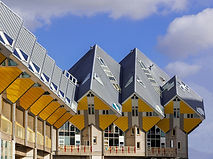
Cube Houses Rotterdam
Step beneath the tilted canopy of an urban forest designed to protest boring architecture.
Witte Huis
Stand at the base of what was once Europe's tallest building, born from engineering the world was still learning.
The Destroyed City
Walk around a screaming bronze figure with a hole where its heart should be.
Jaffa Shoarma
Taste the comfort food a barber accidentally invented with his regular lunch order.
Kunstinstituut Melly
Read the billboard that sparked protests demanding every city deserves a monument to hating your job.
Love Birds by Tymon de Laat
Spot the diamond ring a street artist painted to propose to his girlfriend on this wall.
Santa Claus by Paul McCarthy
Consider why a giant bronze Santa holding a suspicious object became Rotterdam's most debated landmark.
Sylvette - Pablo Picasso & Carl Nesjar
See how a seventy-three-year-old master became captivated by a teenager's ponytail and changed fashion history.
Museum Boijmans Van Beuningen
Catch your own reflection in the mirrored bowl that holds over one hundred fifty thousand hidden artworks.
OR
Download app for instant tour access


Top Reviews
Full Description
Important Information
Instructions with link to app and how to access the tour will be sent to your email post checkout
You can gain instant access to the tour by downloading the app and buying the tour on the app