Strasbourg City self-guided audio walking tour
Stroll through Strasbourg’s charming streets and uncover a blend of half-timbered houses, riverside views, and centuries of Franco-German history woven into every corner.
4.6
( 7 reviews )
$5.99
Free Cancellation
Cancel up to 2 hours in advance for full refund

Walk by Tourific
Instant tour access


Highlights
Hear how one man’s printing invention changed European history – but not in the way most people think
Palais Rohan – power, prestige… and a scandal that still raises eyebrows
John Calvin’s Strasbourg years – why he came here and what changed because of it
A battle few talk about – but without it, Strasbourg wouldn’t be the city it is today
WWII liberation pledge – made thousands of miles away, fulfilled in these streets
Start beside the cathedral and journey through centuries – Roman origins, medieval power struggles, religious reform and wartime resilience
Preview Stop
About this activity
Free Cancellation
Cancel up to 2 hours in advance for a full refund
Valid 365 days
Tour is valid for 1 year and can be used multiple times
Language Options
English | French | German | Spanish | Italian | Dutch | Polish | Russian | Portuguese
Duration
1 hour and 30 minutes
Itinerary
Pont Couverts
Step onto the historic Ponts Couverts, a fortified bridge ensemble that has guarded Strasbourg since the Middle Ages.
Barrage Vauban
Explore the Barrage Vauban, a 17th-century defensive marvel that once shielded Strasbourg by flooding the plains against invading armies.
École Nationale d'Administration
Walk past the École Nationale d’Administration, the prestigious institution that has trained many of France’s top leaders and diplomats.
La Petite France
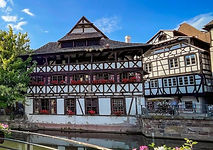
Stroll into La Petite France, Strasbourg’s most enchanting quarter, where half-timbered houses lean over calm canals like a storybook come to life.
Strasbourg
Admire Strasbourg’s distinctive half-timbered houses, their steep roofs and carved wooden frames reflecting centuries of Alsatian craftsmanship.
Restaurant Maison Des Tanneurs - Gerwerstub
Pause before the Maison des Tanneurs, a beautifully preserved 16th-century timbered house that once stood at the center of Strasbourg’s tanning district.
Mont Sainte-Odile
Hear the story of Saint Odile, the blind-born daughter miraculously granted sight and destined to become Alsace’s beloved patron saint.
Albert Schweitzer Statue
Discover the legacy of Albert Schweitzer, the Alsatian-born physician, philosopher, and Nobel Peace Prize laureate whose humanitarian work inspired the world.
St. Thomas Church
Step inside St. Thomas Church, a rare example of Alsatian Gothic architecture and the spiritual heart of Strasbourg’s Protestant community.
Place Gutenberg
Stand in Gutenberg Square, where the inventor of the printing press is honored at the very heart of Strasbourg’s historic center.
Maisons-Laffitte
Step into the Maison d’Alsace Biscuiterie, where traditional Alsatian baking fills the air with the warm scent of spices and butter.
Place des Tripiers
Pause at Place des Tripiers, a quiet square once home to Strasbourg’s medieval tripe merchants and bustling market stalls.
Palais Rohan
Admire the grand Palais Rohan, an 18th-century masterpiece once home to Strasbourg’s prince-bishops and a showcase of refined French Baroque elegance.
Cathedrale Notre Dame de Strasbourg
Begin your journey at the foot of Strasbourg Cathedral’s magnificent façade, where every carved figure hides a story from scripture, legend, or medieval life. As you move inside, you’ll uncover how Gothic ingenuity—ribbed vaults, soaring arches, and flying buttresses—shaped this landmark into a triumph of light and height.
OR
Download app for instant tour access


Top Reviews
Danielle
Strasbourg and Its Past
3 June 2026
Lyala
Fun way to explore new city
12 April 2026
Eden
A lovely experience.
9 May 2026
Full Description
Important Information
Instructions with link to app and how to access the tour will be sent to your email post checkout
You can gain instant access to the tour by downloading the app and buying the tour on the app.